Vintage audio repair
Sanyo M4440 Cassette Player Repair: Bringing a Sentimental Favourite Back to Life
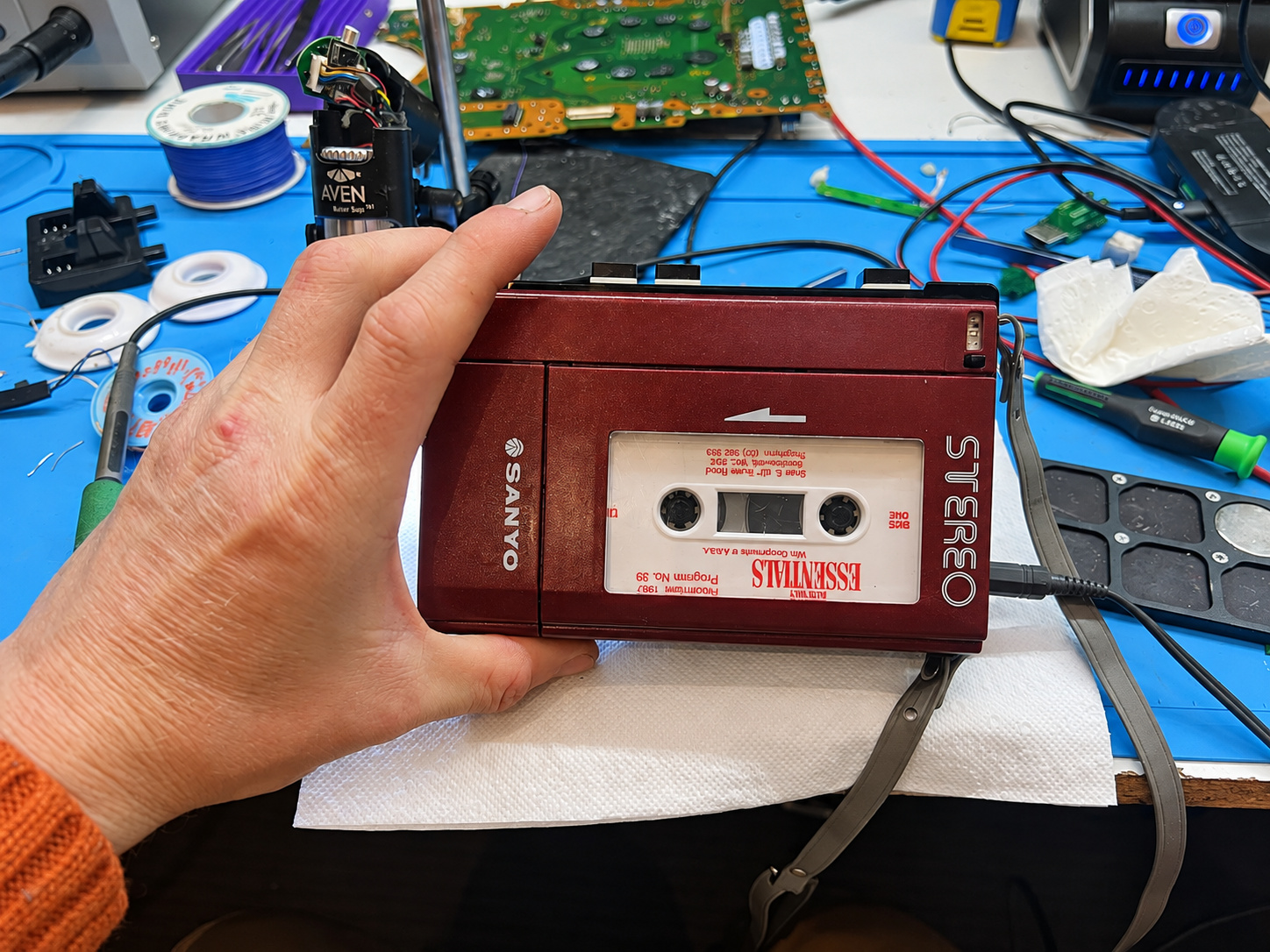
Some repairs are about keeping a familiar piece of someone's life working. This Sanyo M4440 portable stereo cassette player came into Repair Lab with sentimental value to its owner, who wanted to hear it playing again.
With its burgundy case, cassette window and wrist strap, it was a lovely piece of equipment to have on the bench. Getting it running, however, took more than a routine service.
Finding out why the tape wouldn't move
The initial job was booked as a belt and headphone foam replacement. Once we started investigating, we found electrical faults that also needed attention.
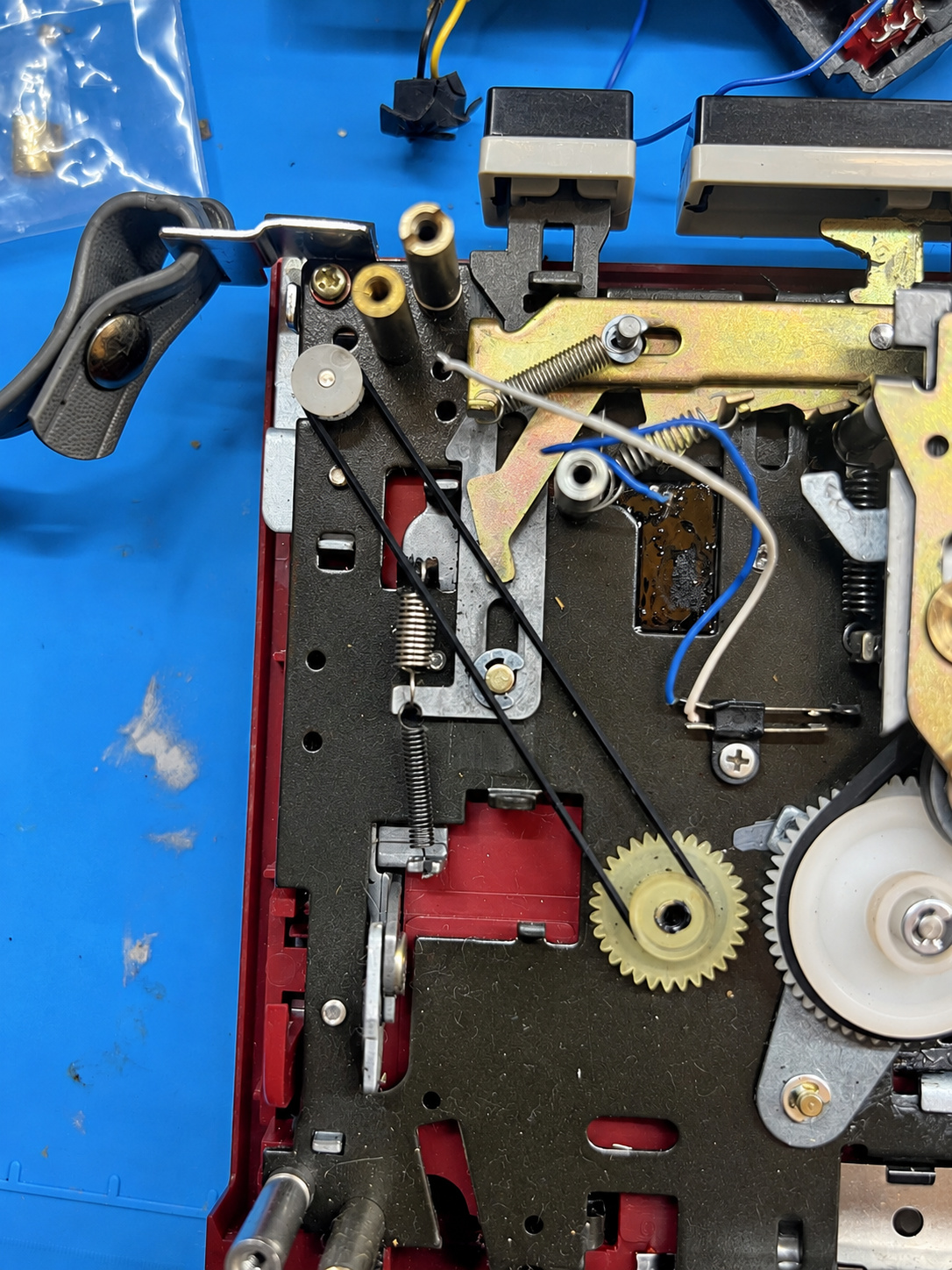
The drive belts appeared intact, but the motor wasn't receiving power through the player's own circuitry. There was initially no operation light either, even though power was reaching the circuit board.
We tested the motor separately and confirmed it could turn the mechanism. That gave us a useful direction: trace the power supply and switching contacts to find out where the voltage was being lost.
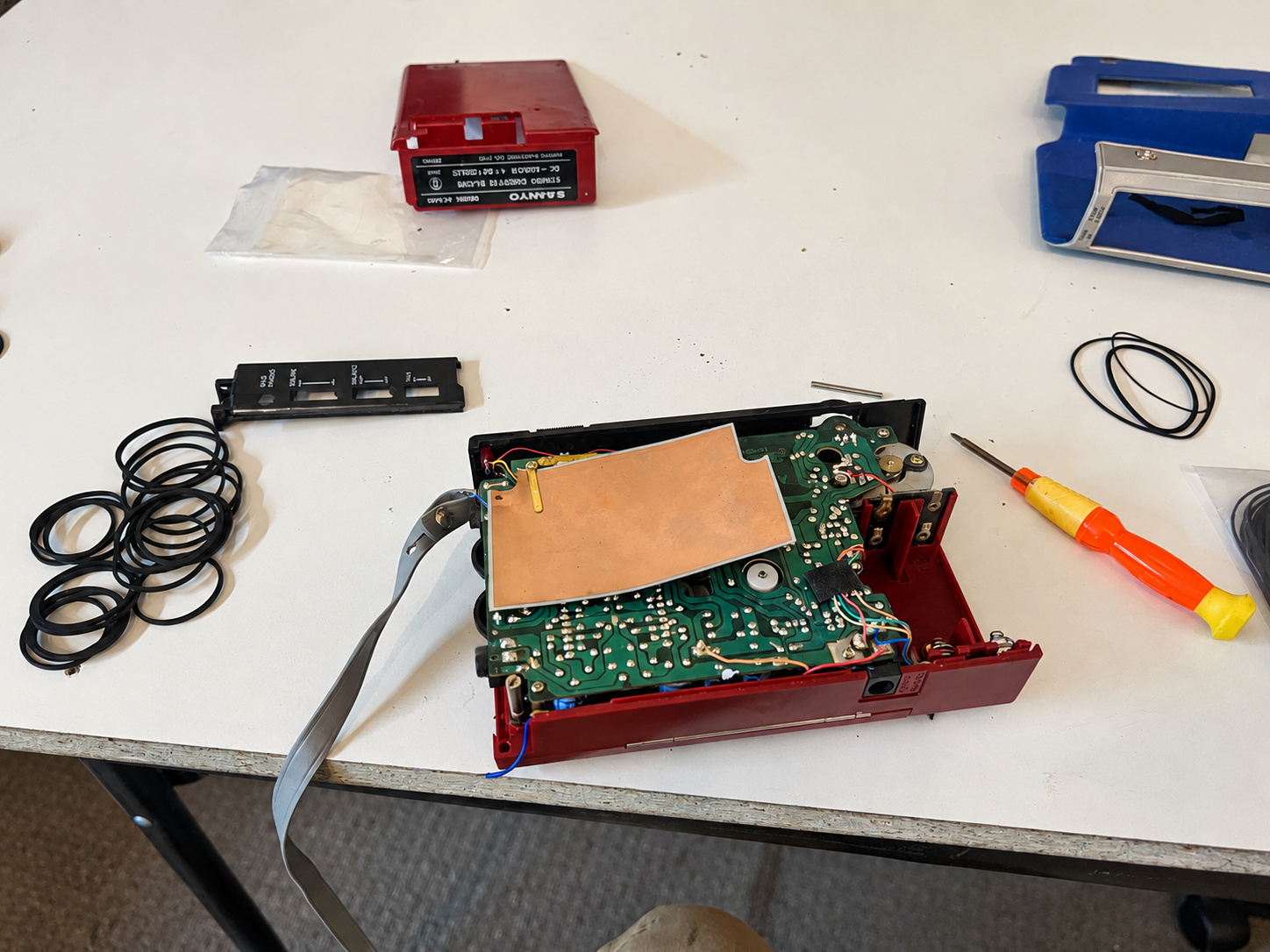
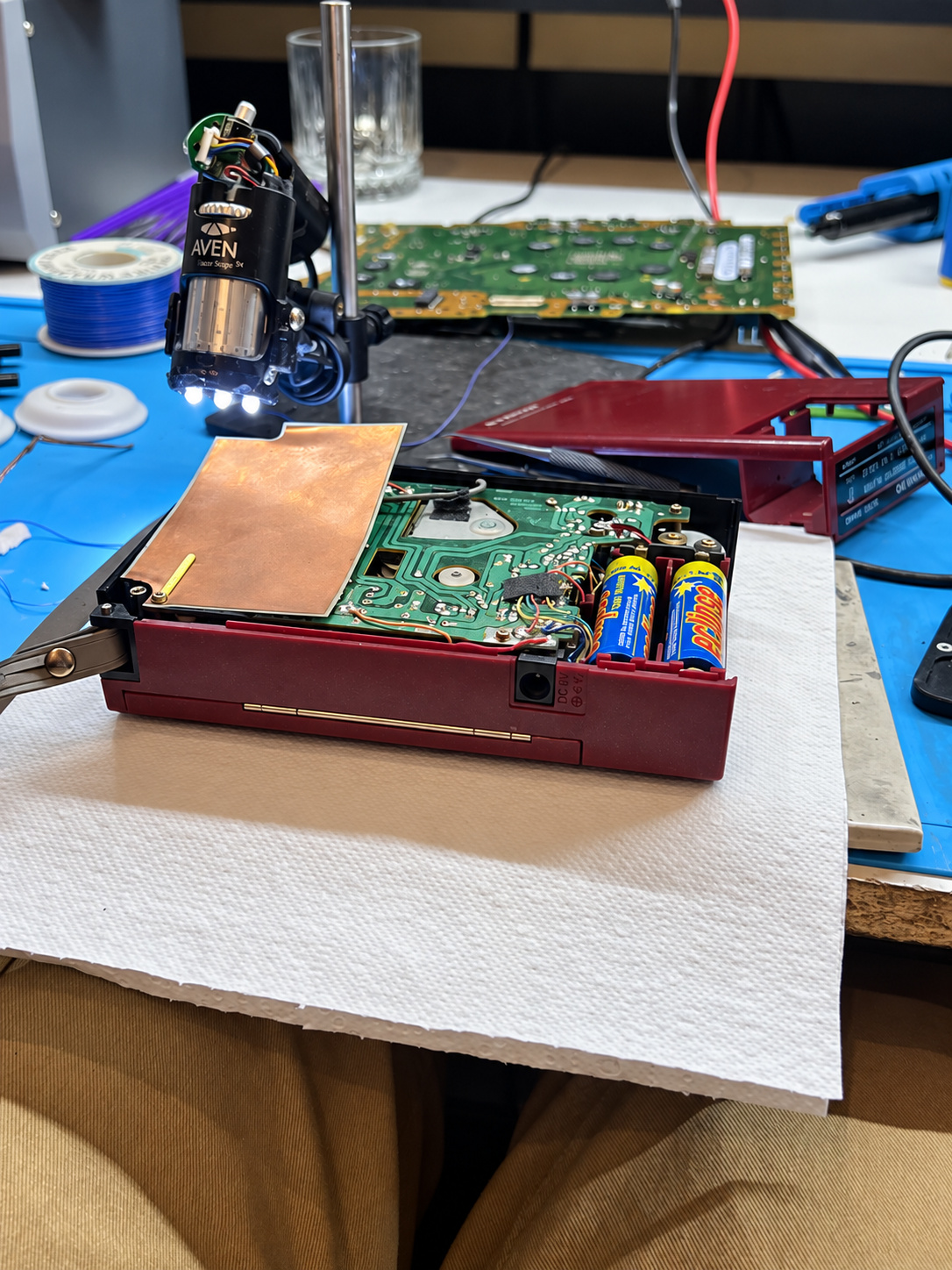
Access meant carefully dismantling the player and removing the circuit board to reach the areas we needed to inspect and measure. In a compact cassette player, the electronics and mechanical parts fit closely together, so getting to a small fault can involve quite a bit of disassembly.
A switch that clicked but didn't conduct properly
One of the power-switch contacts measured around 100 ohms when it should have offered almost no resistance.
A switch can still feel normal when pressed while making a poor electrical connection inside. In this case, cleaning the contact brought its resistance back down to approximately zero ohms.
After reconnecting it, the operation light returned. That was progress, but the motor still wasn't receiving power, so the investigation continued.
Good batteries, poor connections
The battery terminals proved to be another important part of the fault.
The batteries themselves tested good, but high resistance at their contact points was preventing a reliable supply from reaching the player. Before cleaning, the supply voltage fluctuated unpredictably.
The terminals needed extensive cleaning to restore a dependable connection. Afterwards, the supply held steady at 6 V, and the repair was completed with the player working again.
It's a useful reminder that testing the batteries is only part of checking a battery-powered device. The connections between those batteries and the circuit matter just as much.
Keeping a much-loved cassette player going
This repair involved several stages of fault finding: checking the mechanism, testing the motor, measuring the switches and tracing the power supply. Each finding helped explain another part of the problem.
For the owner, the result was being able to use a cassette player that mattered to them again. Those are satisfying repairs to finish, and a good reason to take the time to investigate older electronics carefully.
Have a cassette player or another much-loved piece of electronics that needs attention? Contact Repair Lab in Kangaroo Flat, Bendigo, to discuss an assessment.